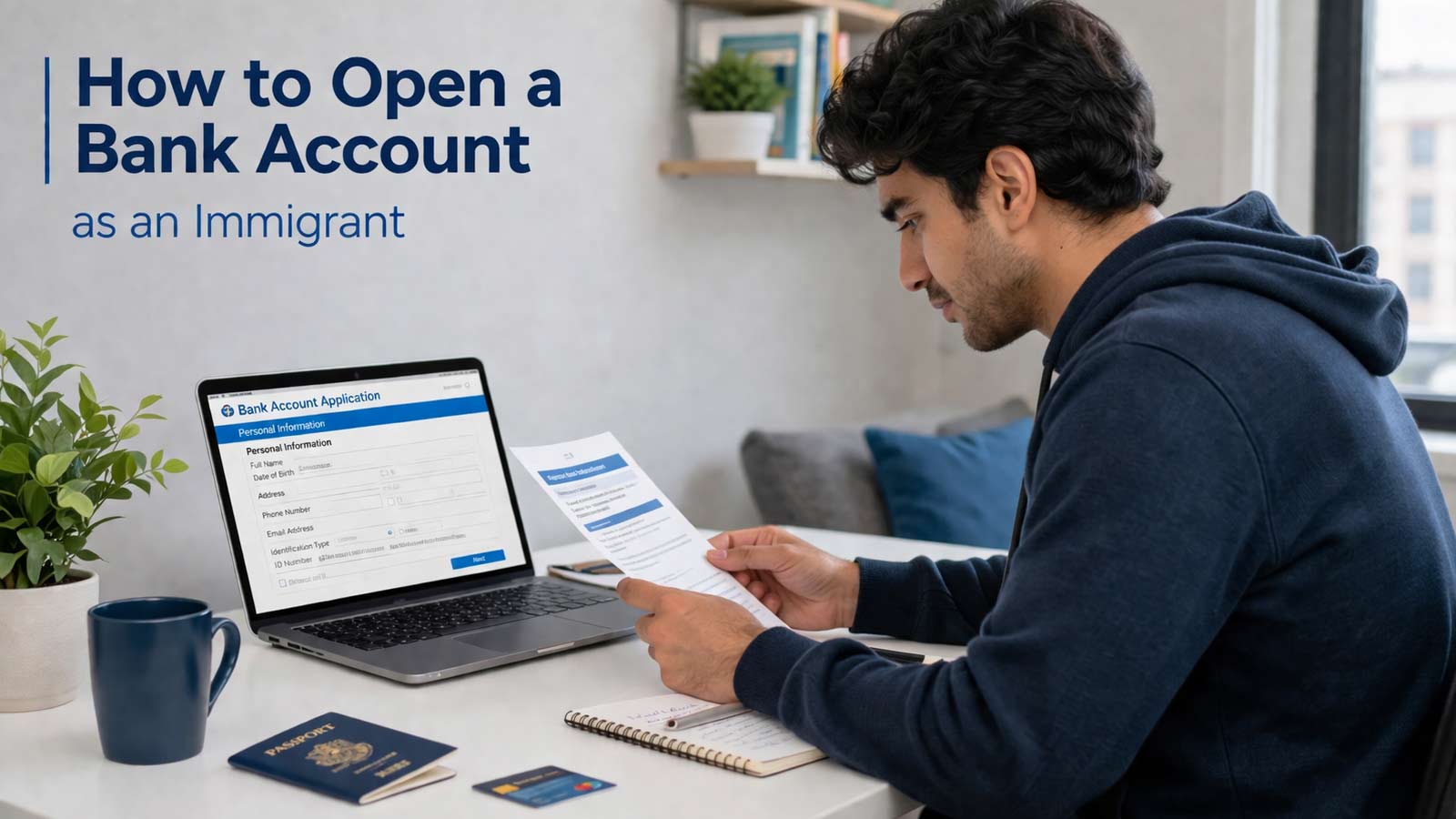
How to Open a Bank Account as an Immigrant (Step-by-Step Guide)
Opening your first bank account as an immigrant can feel overwhelming. Between unfamiliar requirements, identification rules, and different banking systems, it’s easy to get stuck before you even begin. But the truth is, most newcomers can open an account fairly quickly once they understand what banks are looking for.
If you’re just starting your financial journey in the U.S. or Canada, this is often one of the first and most important steps. A bank account allows you to receive income, pay bills, and eventually build your credit profile.
Short Answer: Most immigrants can open a bank account using alternative identification such as a passport and proof of address, even without an SSN. Many banks accept ITINs or allow accounts with limited documentation, depending on their policies.
Can immigrants open a bank account without an SSN?
Yes, in many cases, immigrants can open a bank account without a Social Security Number (SSN), although requirements vary by institution and country. Banks typically offer alternatives like ITINs or allow accounts using other forms of identification.
In the United States, some banks accept an ITIN instead of an SSN. If you’re unsure about the difference, it helps to understand how they work in detail in this guide: SSN vs ITIN: What’s the Difference.
In Canada, banks generally do not require a Social Insurance Number (SIN) just to open an account. What matters more is your identity and residency status. This is important because many newcomers assume they need a government-issued number before they can even start banking, which is not always true.
What documents do immigrants need to open a bank account?
Most banks require two main things: proof of identity and proof of address. The exact list can vary, but the overall structure is fairly consistent across institutions.
Commonly accepted documents:
- Primary ID: Passport or government-issued identification
- Secondary ID: Visa, study permit, or work permit
- Proof of address: Utility bill, lease agreement, or official letter
This is where many beginners get confused. What this really means is that banks are trying to verify who you are and where you live. They’re not necessarily looking for perfect documentation, but they do need consistency.
Quick Tips
- Bring more documents than you think you need
- Use official documents with your full legal name
- Ensure your address matches across documents
Requirements may vary by bank, so it’s always a good idea to call ahead or check online before visiting a branch.
How to open a bank account as an immigrant (step-by-step)
The process is usually straightforward once you have the right documents. In most cases, it can be completed in less than an hour at a physical branch or online.
- Step 1: Choose a bank that works with newcomers
- Step 2: Gather your identification and proof of address
- Step 3: Visit a branch or apply online
- Step 4: Complete identity verification
- Step 5: Deposit an initial amount (if required)
This is important because some banks actively offer newcomer programs, which can make the process much smoother. These programs often include fee waivers and simplified requirements.
If you want a deeper breakdown of the process, you can also explore this full guide: How to Open a Bank Account as an Immigrant.
What type of bank account should you choose?
Most newcomers should start with a basic checking (U.S.) or chequing (Canada) account. These accounts are designed for everyday transactions like deposits, withdrawals, and bill payments.
Typically, these accounts come with a debit card and online banking access. What many beginners don’t realize is that this account becomes the foundation of your entire financial system.
Once you’re set up, you can gradually move into other financial products like savings accounts and credit cards. If you’re planning to build credit, this guide can help you understand the next step: Build Credit From Scratch.
Common Mistakes
- Choosing an account with high monthly fees
- Ignoring minimum balance requirements
- Not setting up online banking
Can opening a bank account help build credit?
Opening a bank account alone does not build credit, but it plays a crucial supporting role. It allows you to manage money properly and eventually access credit products.
This is where many people misunderstand the system. A bank account is not reported to credit bureaus, but it’s often required to get a credit card or loan. And those are what actually build your credit history.
If you’re new to credit systems, it’s worth understanding the basics here: How Credit Works: A Beginner’s Guide.
From there, many immigrants move toward secured credit cards or beginner credit products. This is one of the most common paths to building a strong financial profile over time.
Related Topics
Frequently Asked Questions
Can I open a bank account as a temporary resident?
Yes, most banks allow temporary residents such as students or workers to open accounts using valid permits and identification documents.
Do I need a minimum deposit to open an account?
In most cases, yes. However, the amount is usually small and depends on the bank. Some newcomer programs waive this requirement.
Can I open a bank account online as an immigrant?
Some banks allow online applications, but many require in-person identity verification, especially for newcomers without local credit history.
Important Disclaimer
This article is for informational purposes only and does not constitute financial, legal, or tax advice in the United States or Canada. Financial situations vary, and you should consult with a qualified professional before making any financial decisions. While we aim to provide accurate and up-to-date information, we make no guarantees regarding completeness or accuracy.
Conclusion
Opening a bank account as an immigrant is one of the first real steps toward financial stability. It may feel complicated at first, but once you understand the requirements, the process becomes much more manageable.
Start simple, focus on getting the basics right, and build from there. Over time, this small step becomes the foundation for everything else — from managing your income to building credit.
Want to learn more? Continue your journey here: Complete Financial Guide for Newcomers