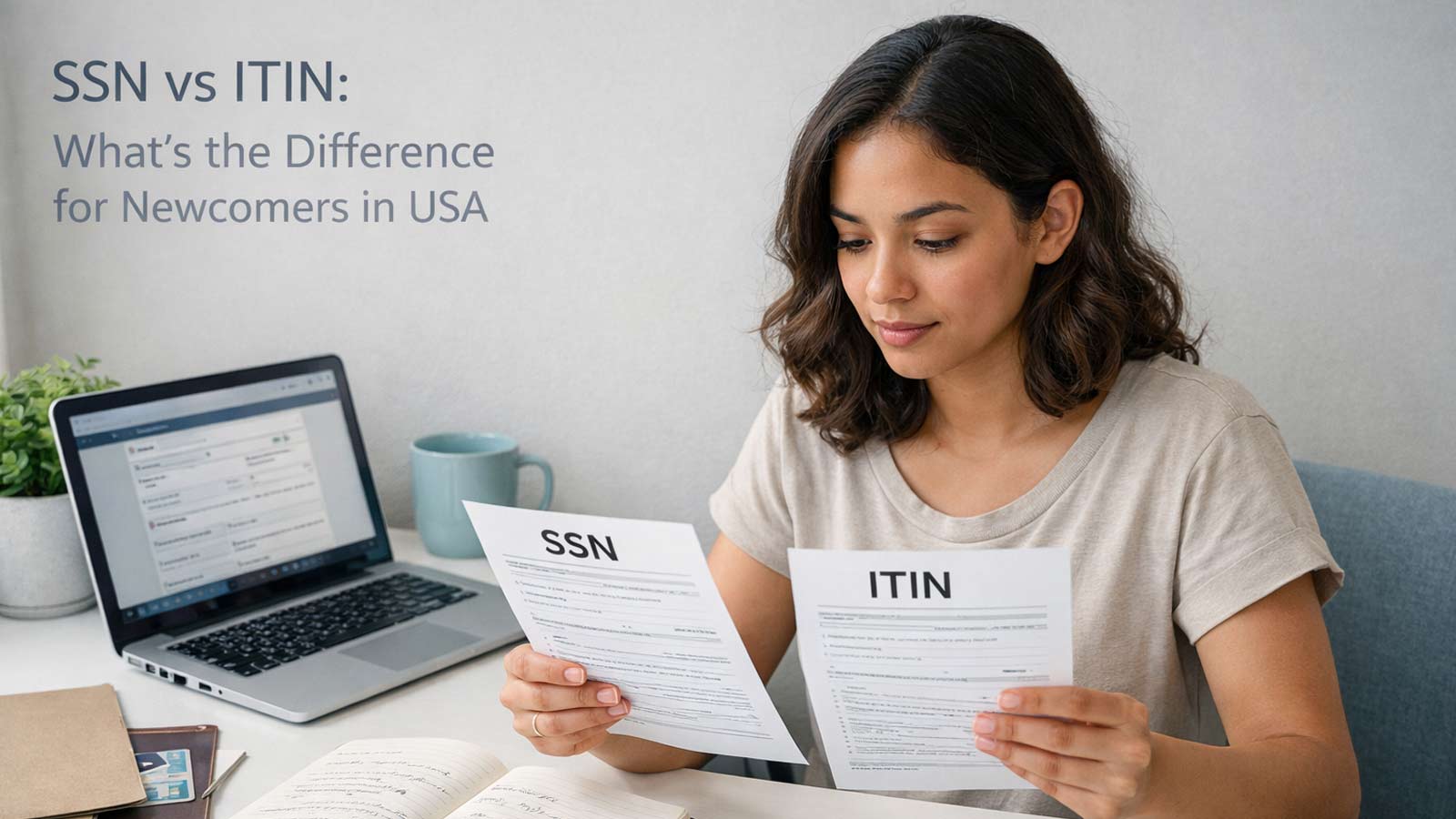
SSN vs ITIN: What’s the Difference and Which One Do You Need?
If you’re new to the United States or navigating the financial system for the first time, you’ve probably come across two important terms: SSN and ITIN. At first glance, they seem similar—they’re both tax identification numbers—but they serve very different purposes.
Understanding the difference between these two can save you a lot of confusion, especially when opening a bank account, filing taxes, or trying to build credit. Many newcomers assume they need one when they actually qualify for the other—or don’t realize they can still function financially without an SSN.
Short Answer: An SSN (Social Security Number) is used for employment, taxes, and government benefits, while an ITIN (Individual Taxpayer Identification Number) is used only for tax reporting by people who are not eligible for an SSN. Both can help you navigate the financial system, but they are not interchangeable.
What Is an SSN and Who Needs One?
An SSN is a government-issued number used to track your income, taxes, and eligibility for benefits in the United States. It is typically required if you are authorized to work in the country.
In most cases, U.S. citizens, permanent residents, and certain visa holders receive an SSN. This number is central to how financial institutions identify you. Based on how financial systems are structured, your SSN is often tied to employment records, tax filings, and even your credit history.
If you’re settling into the U.S., your SSN becomes a key part of your financial identity. It’s often required when opening accounts or applying for credit. To understand how this fits into your overall setup, you can explore this broader financial guide for newcomers.
What Is an ITIN and When Is It Used?
An ITIN is a tax identification number issued to individuals who are required to file taxes but are not eligible for an SSN. It is used strictly for tax reporting purposes.
In simple terms, the ITIN allows people—such as non-residents, dependents, or undocumented individuals—to comply with U.S. tax laws. What many beginners don’t realize is that having an ITIN does not grant work authorization or access to government benefits.
However, an ITIN can still be useful. Some banks accept ITINs for account opening, and certain lenders may consider ITIN holders for credit products, depending on their policies.
Quick Tips
- An ITIN is only for tax purposes—not employment
- You can still open some financial accounts with an ITIN
- Requirements vary depending on the institution
SSN vs ITIN: Key Differences Explained
The main difference between SSN vs ITIN comes down to eligibility, purpose, and benefits. While both are used for tax reporting, only the SSN is linked to employment and broader financial access.
This is where many people get confused. They assume both numbers work the same way—but they don’t. Understanding these differences can affect your ability to work, access services, and build financial stability.
- Purpose: SSN is for work, taxes, and benefits; ITIN is for taxes only
- Eligibility: SSN requires work authorization; ITIN does not
- Benefits: SSN holders may qualify for benefits; ITIN holders do not
- Credit Access: SSN is widely accepted; ITIN acceptance varies
Can You Build Credit with an ITIN?
Yes, it is possible to build credit with an ITIN, although the process may be more limited depending on the lender. Some financial institutions offer ITIN-based credit products.
This is important because credit systems are typically built around identity verification. While an SSN is the standard, many lenders have adapted to include ITIN applicants. For example, certain secured credit cards or alternative lenders may accept ITINs.
If you’re starting from scratch, you may benefit from learning how to build credit from scratch step by step, even without a traditional profile.
Common Mistakes
- Assuming you can’t build credit without an SSN
- Applying to lenders that don’t accept ITINs
- Not verifying requirements beforehand
Which One Do You Need as a Newcomer?
Whether you need an SSN or ITIN depends on your legal status and purpose in the United States. If you are authorized to work, you will typically need an SSN. If not, but you must file taxes, an ITIN is usually required.
For many newcomers, this is one of the first financial decisions they encounter. Policies can differ depending on your situation, so it’s important to confirm your eligibility before applying. This step often connects with other financial tasks, like learning how to open a bank account as an immigrant.
- Step 1: Determine your work eligibility status
- Step 2: Confirm whether you need to file U.S. taxes
- Step 3: Apply for the appropriate number (SSN or ITIN)
Does SSN vs ITIN Affect Your Credit Score?
Your credit score is not directly determined by whether you have an SSN or ITIN, but by how your financial activity is reported. However, SSNs are more widely accepted by lenders and credit bureaus.
This can make a big difference over time. While ITIN users can still build credit, they may face more limited options. Understanding how scores are calculated can help you navigate this more effectively. You can learn more in this guide on credit score ranges.
Related Topics
- How Credit Works: A Beginner’s Guide
- Secured vs Unsecured Credit Cards
- Build Credit as an Immigrant
- What is a Good Credit Score?
Frequently Asked Questions
Can you have both an SSN and ITIN?
No. If you become eligible for an SSN, your ITIN is typically no longer used for tax purposes.
Can I open a bank account with an ITIN?
Yes, many banks allow ITIN holders to open accounts, but requirements may vary by institution.
Is an ITIN enough to get a credit card?
Some lenders accept ITINs, especially for secured cards, but options may be more limited than with an SSN.
Does an ITIN expire?
Yes, ITINs can expire if they are not used on a tax return for several years or under certain IRS rules.
Important Disclaimer
This article is for informational purposes only and does not constitute financial, legal, or tax advice in the United States or Canada. Financial situations vary, and you should consult with a qualified professional before making any financial decisions. While we aim to provide accurate and up-to-date information, we make no guarantees regarding completeness or accuracy.
Conclusion
Understanding the difference between SSN vs ITIN is a key step in navigating the U.S. financial system. While both numbers play a role in tax reporting, they serve very different purposes—and knowing which one applies to you can prevent costly mistakes.
For most beginners, the goal is simple: get the right identification, use it correctly, and build your financial foundation step by step.
Want to go further? Read the full financial guide for newcomers to understand the next steps in your journey.
Source prompt: :contentReference[oaicite:0]{index=0}